


Injury from someone else’s carelessness disrupts life for Kentucky families in many ways. Medical treatment, missed work, and long recovery periods create stress that affects daily routines. Families grieving a loved one also deal with profound loss while trying to understand how the legal process works. Many people want to know how long a personal injury case might take and why some cases move slowly. What slows down your personal injury case depends on several factors, including medical care, insurance company tactics, and court scheduling.
People throughout Kentucky benefit from the steady support of a knowledgeable and focused personal injury lawyer who understands how to protect their rights. Reaching out to a Kentucky personal injury lawyer near you for a confidential consultation gives you space to ask questions and learn how the legal process fits your situation.
Key Takeaways: Personal Injury Claim Timeline
- Medical treatment, disputes over fault, and insurance company behavior often create delays.
- Organized records and strong evidence usually help a case move faster.
- Kentucky’s legal deadlines influence the timeline from the very beginning.
- Court schedules and backlogs add time when cases require litigation.
- A skilled attorney helps reduce preventable delays throughout your claim.
How Long Does a Personal Injury Case Take in Kentucky?

Personal injury cases in Kentucky follow a general timeline, though each person’s experience varies. Some claims settle within a few months, while cases involving severe injuries, liability disputes, or complex financial losses take longer. The type of accident and the seriousness of your injuries usually influence the pace of your case.
Average Timeline for Different Case Types
Motor vehicle collision cases with shorter treatment periods often settle faster. When injuries require surgery, physical therapy, or long term follow up, attorneys need more documentation to show the full impact of the harm. Wrongful death claims and cases involving permanent injury usually require extended investigation and detailed evidence, so they follow a longer timeline.
Slip and fall cases sometimes take additional time because property owners may deny responsibility or dispute dangerous conditions. Dog bite cases depend on the severity of the injury and clarity of evidence showing the animal’s behavior and history.
Factors That Determine Case Duration
Several factors influence timing. Medical treatment, insurance company communication, witness availability, and disputes over fault shape progress. Longer treatment periods extend the timeline because your attorney needs complete documentation before entering negotiations. Insurance companies sometimes slow down the process by requesting additional records or issuing low settlement offers that require further negotiation.
Kentucky’s Statute of Limitations for Personal Injury Claims
Kentucky law generally gives injured people one year from the date of injury to file a lawsuit. Wrongful death claims usually follow a one year deadline from the date a personal representative is appointed. Missing these deadlines ends your ability to take your case to court, so early action helps protect your right to pursue compensation.
What Are the Main Phases of a Personal Injury Claim?
Personal injury cases move through several stages, each of which serves a specific purpose. These stages build on one another and influence how long the overall claim may take.
Initial Investigation and Evidence Gathering
Your attorney starts by collecting evidence related to the accident, your injuries, and the person responsible. Photos, witness statements, police reports, medical records, and sometimes reconstruction materials support the claim. Early investigation prevents evidence from being lost and strengthens your case from the start.
Medical Treatment and Documentation Period
Your medical care provides essential proof of injury. Doctors record diagnoses, treatment plans, progress notes, medications, surgeries, and long term limitations. Treatment needs time, so this phase usually takes longer when injuries are serious or require multiple specialists. Complete records help your attorney present a clear picture of your condition.
Demand Negotiation with Insurance Companies
Once treatment stabilizes, your attorney prepares a demand letter. This document outlines what happened, your injuries, and the compensation sought. Insurance companies review the materials, sometimes request more information, and often begin with low offers. Negotiations may require several rounds of communication.
Filing a Lawsuit if Settlement Fails
If settlement discussions do not resolve the claim, your attorney files a lawsuit to keep the case moving. Filing formally begins litigation, sets deadlines, and requires the other party to respond. Even after filing, many cases still settle before trial.
Discovery and Pre Trial Proceedings
Discovery allows both sides to exchange information. This includes written questions, document requests, and depositions. Depositions involve recorded questions under oath. Discovery clarifies disputed facts and helps attorneys assess the strength of the case.
Trial and Verdict
If settlement still does not occur, the case proceeds to trial. Judges and juries review evidence and determine the outcome. Trial dates depend on court schedules, which sometimes causes delays. Cases occasionally continue to appeals after a verdict, adding more time.
Why Does Ongoing Medical Treatment Delay Your Case?
Medical recovery plays a major role in the pace of a personal injury claim. Attorneys need a full understanding of your condition before negotiating a settlement.
The Importance of Reaching Maximum Medical Improvement
Maximum medical improvement means doctors believe your condition has stabilized. You may still need treatment, but significant improvement is unlikely. Reaching this point helps your attorney estimate long term needs and calculate damages accurately.
How Premature Settlement Can Cost You Compensation
Insurance companies sometimes try to settle before victims know the full scope of their injuries. Settling before receiving full diagnoses or understanding long term limitations often leads to financial shortfalls. Once you accept a settlement, you cannot reopen the claim.
Documenting Future Medical Needs
Some injuries require long term care. Surgeons, therapists, or specialists provide opinions about future treatment needs. These evaluations help your attorney secure compensation for expected medical costs rather than leaving you financially responsible later.
What Role Does Insurance Company Behavior Play in Case Delays?
Insurance companies influence how quickly a claim progresses. Adjusters must follow Kentucky laws, but some still use tactics that slow the process.
Common Delay Tactics Used by Insurance Adjusters
Adjusters sometimes prolong the investigation, request unnecessary documents, or ask for repeated interviews. These tactics create delays and frustration. Persistent follow up and organized record keeping help reduce avoidable slowdowns.
Low Ball Offers and Bad Faith Negotiations
Insurance companies often begin with offers that fall far below what the evidence supports. This approach tests whether the injured person will settle early. When an insurer refuses to negotiate fairly or ignores clear evidence, attorneys sometimes pursue a bad faith claim, which addresses unreasonable insurance conduct.
Kentucky’s Requirements for Insurance Company Response Times
Kentucky regulations require insurance companies to respond promptly, investigate claims thoroughly, and make decisions within specific time periods. Violations may strengthen your case and provide leverage during negotiations.
How Do Liability Disputes Slow Down Your Personal Injury Claim?
Disagreements over who caused the accident extend the timeline because both sides must resolve responsibility before finalizing a settlement.
Investigating Fault in Kentucky’s Comparative Negligence System
Kentucky follows a comparative negligence system. Each party’s share of responsibility reduces their compensation. For example, if you bear twenty percent of the fault, your recovery decreases by twenty percent. Attorneys work to show the other party holds greater responsibility.
Multiple Party Claims and Complex Liability Issues
Accidents involving several vehicles, commercial property, or unsafe conditions sometimes require deeper investigation. Each party may blame others, and insurance companies may argue over coverage. This creates delays while attorneys sort through each version of events.
When Expert Witnesses Are Needed to Establish Liability
Some claims need expert witnesses to explain technical issues. Their fields include accident reconstruction, engineering, or medical science. Expert reviews require time because they must examine evidence and prepare reports to support key arguments.
What Court Related Factors Can Extend Your Timeline?
Court procedures also affect the pace of your claim.
Kentucky Court Dockets and Scheduling Challenges
Judges handle many cases at the same time. Heavy caseloads slow the scheduling of hearings, conferences, and trials. When courts run behind, your case may wait for an available date.
Continuances and Motion Practice
Continuances occur when a court changes a scheduled date. Lawyers sometimes request continuances when they need more time to gather documents or prepare witnesses. Motions also take time because judges must review filings and issue decisions.
The Impact of Court Backlogs on Your Case
Backlogs develop when courts have more cases than they can address quickly. Even routine hearings may take months to schedule. These delays often affect cases that go into litigation.
Can Missing or Incomplete Evidence Delay Your Settlement?
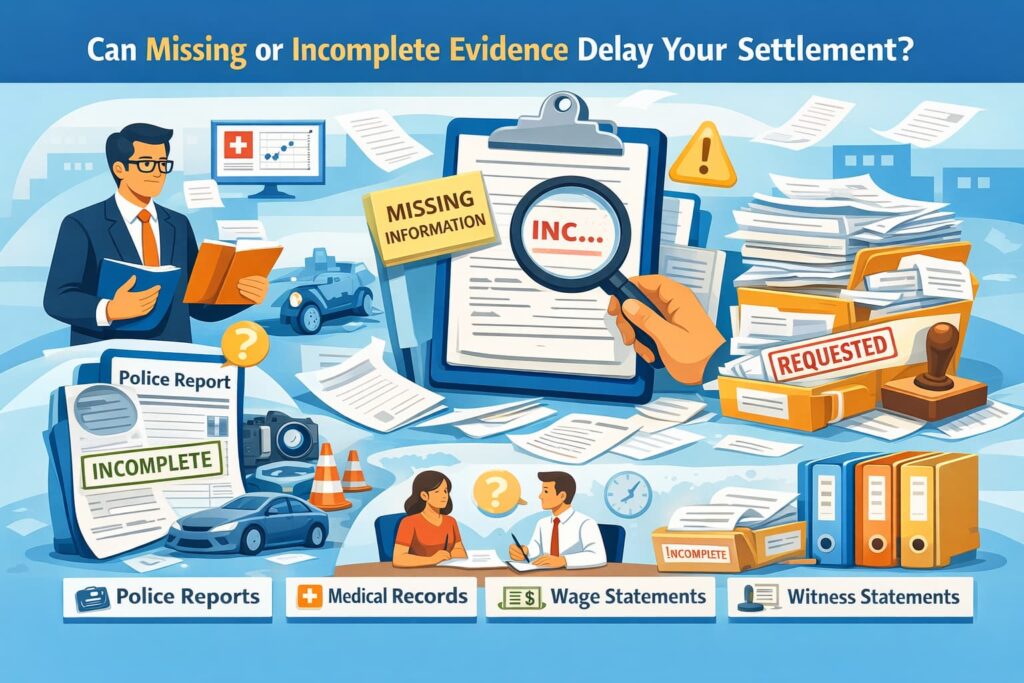
Strong evidence supports faster negotiation. Missing or incomplete records often slow progress because insurance companies want full documentation before considering settlement.
Critical Documentation Needed for Kentucky Personal Injury Claims
Effective claims rely on clear records. Attorneys gather police reports, medical documentation, wage statements, photos, and correspondence. Organized records help prevent objections.
Police Reports and Accident Reconstruction
Police reports serve as important evidence. When reports lack detail or contain mistakes, attorneys may hire accident reconstruction experts to study vehicle damage, road conditions, or skid marks.
Medical Records and Billing Statements
Medical providers sometimes take weeks to release documents. Missing pages, incomplete billing, or slow record departments delay settlement discussions. Attorneys often send repeated requests to collect complete files.
Witness Statements and Testimony
Witnesses sometimes move or forget details. Early interviews help preserve accurate information. Strong witness accounts often speed negotiations and resolve liability disputes.
How Does Your Own Participation Affect the Timeline?
Your involvement plays a meaningful role in the timeline of your case. Staying engaged helps your attorney keep things moving.
Attending Medical Appointments and Following Treatment Plans
Missed appointments create gaps in your medical history. Insurance companies sometimes use these gaps to argue your injuries improved earlier than claimed. Consistent treatment supports your case.
Responding to Your Attorney’s Requests Promptly
Attorneys frequently need signatures, records, or clarifying information. Quick responses help avoid delays and keep the case on a steady path.
Being Available for Depositions and Court Appearances
Litigation sometimes requires your participation. Flexibility helps prevent postponements and avoids unnecessary scheduling conflicts.
What Happens When the Defendant Files Counterclaims or Appeals?
Some cases grow more complicated when defendants pursue additional legal steps.
Understanding Counterclaims in Kentucky Personal Injury Cases
A counterclaim accuses you of wrongdoing and attempts to shift responsibility for the accident. These claims require additional work, extending the timeline while your attorney addresses both your claim and the counterclaim.
The Appeals Process and Extended Timelines
When parties disagree with a verdict, they may appeal. Appeals involve written briefs, transcripts, and court review, which take many months. This stage sometimes adds significant time before a final decision.
Ways to Help Move Your Personal Injury Case Forward
Your efforts contribute to a smoother and faster case process.
Working Closely with Your Attorney
Clear communication helps your attorney identify problems early and resolve delays before they grow. Regular updates about your medical condition and treatment help shape your case.
Maintaining Organized Records
Keep treatment receipts, wage statements, medical updates, and communication notes in one place. Organized records simplify preparation for negotiation or litigation.
Avoiding Social Media Pitfalls
Insurance companies search social media for posts that contradict injury claims. Think carefully before posting anything related to daily activities or your recovery.
Being Patient While Maximizing Your Recovery
Recovery takes time. Allowing your treatment to run its course and giving your attorney space to gather full documentation often results in stronger settlement outcomes.
How Johnson Law Firm Can Help
Kentucky families deserve strong support when dealing with personal injury claims. At Johnson Law Firm, we bring experience, skill, and a focused approach to every case. We collect evidence, communicate with insurance companies, and identify obstacles that slow progress. You receive guidance at every stage of your claim and steady support while we work to secure the compensation you deserve.
We take pride in offering compassionate service, thorough preparation, and dedicated advocacy for people throughout Kentucky. Our firm works to reduce preventable delays and protect your rights from start to finish.
Frequently Asked Questions About Personal Injury Claim Timelines in KY
Will hiring an attorney make my case take longer?
No. Attorneys usually help your case move faster because they know how to respond to insurance delays and gather missing documents.
Can I get money before my case settles in Kentucky?
Some people qualify for pre settlement funding through third party companies. Your attorney can explain how it works and whether it applies to your situation.
What happens if I need to move out of state during my case?
Your attorney can continue representing you. Many steps occur by phone or video, though you may need to travel for certain hearings.
Does going to trial always mean a longer case?
Trial usually adds time because the court must schedule hearings and the trial itself. Many cases settle before the trial date.
How often will I receive updates about my case timeline?
Your attorney provides updates during each stage and explains how new developments affect the timeline.
Contact Our Personal Injury Attorneys in KY Now
People who suffered injuries or lost a loved one because of someone else’s wrongdoing deserve attentive legal support. Acting quickly protects your rights and helps prevent unnecessary delays.
Johnson Law Firm handles Kentucky personal injury cases with care, skill, and dedication. Families under financial strain or uncertainty benefit from legal guidance created specifically for their needs. Reach out today for a free consultation.
Attorney Billy Johnson
 William “Billy” Johnson grew up in the Dorton area of Pike County, Kentucky, and early on decided to stay in the beautiful Appalachian mountains. Like many others in Eastern Kentucky, Billy’s dad worked as a coal miner, a hard job but one that taught his son how to meet challenges head on and persevere. Attorney Billy Johnson has years of experience helping injured clients with claims such as car, truck, and motorcycle accidents, wrongful deaths, work injuries, and more. [ Attorney Bio ]